Metal Detector Calibration
Metal Detector Calibration Services from Cal-Cert
Your metal detection systems help protect consumers by screening products for metal contamination before they leave your facility. Metal can enter products during harvesting, processing, or packaging, so reliable, consistent detection is essential to product safety and reducing the risk of costly recalls.
Cal-Cert provides metal detector calibration services for industrial systems used in food, pharmaceutical, and other production environments.
What is Metal Detector Calibration?
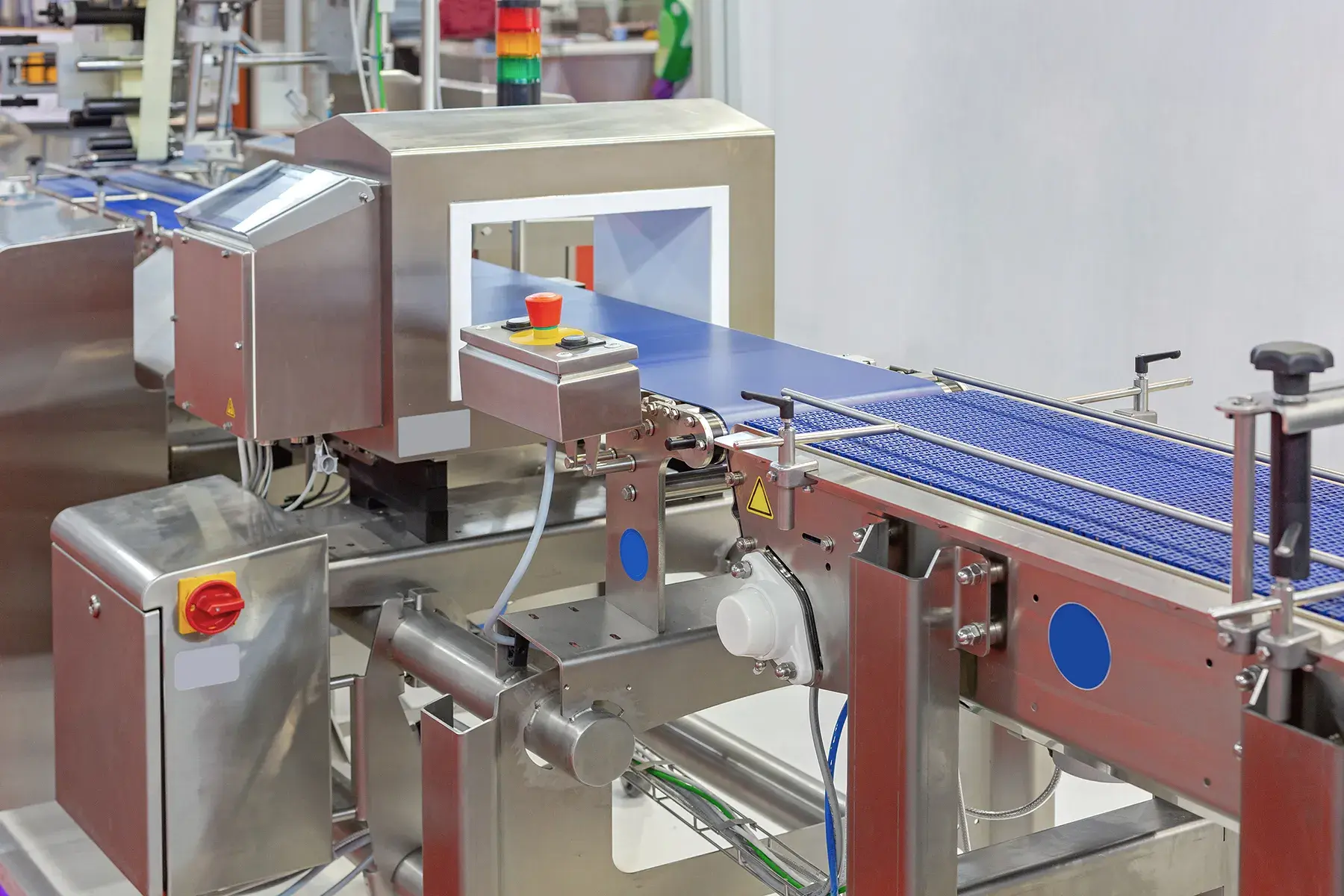
Metal detector calibration tests and documents whether your industrial metal detector reliably detects the metal types and sizes at the locations required by your product safety plan. During testing, a metal or metal alloy test piece is passed through the detector’s opening, called the aperture. The test piece matches the materials and sizes your facility needs to detect, and multiple passes confirm consistent detection.
A Testing Program Built Around Your HACCP Plan
Your testing program should reflect your production line, products, and packaging. We work with your HACCP team to define test parameters for your equipment and the contamination risks your detector needs to identify. If you have not yet established specific test parameters, we can recommend starting points to help you put a testing program in place.
Together with your HACCP team, we define test parameters that typically include:
-
Metal type: Steel, stainless steel, brass, or aluminum
-
Test piece size: From standard reference sizes down to less than 1mm, with sizing guided by your product type (wet or dry) and the detector's aperture height
-
Shape: Sphere, puck, stick, wire/rod, card, or other relevant shapes
-
Location within the detection aperture: Center, or other positions relevant to your product flow
-
Line speed: Typically tested at the detector's current operating rate
-
Product proximity: Standalone testing, or testing over, under, beside, or inside actual product/packaging
This collaborative approach ensures your calibration program reflects the real conditions and contamination risks on your line—not a generic test that may not match what your HACCP plan actually requires.
Why Metal Detector Calibration is Essential for Your Operations
HACCP and Critical Control Point Compliance
Metal detection is often a Critical Control Point (CCP) in your facility’s HACCP plan. Documented calibration records help demonstrate that this safety control is working as intended.
Consumer Safety and Recall Prevention
A metal detector that does not meet performance requirements can let contaminated products reach consumers. Reliable detection helps protect consumers and reduce the risk of costly recalls that can damage your reputation.
Automatic Rejection System Verification
For systems with automatic rejection, testing confirms that contaminated products are removed from the line—not just that an alarm sounds. If the detector identifies metal but the rejection system fails to remove the product, the test point fails. Detection alone is not enough.
Regulatory and Customer Audit Readiness
Food safety audits, customer assessments, and regulatory inspections often require proof that your metal detection equipment is properly calibrated. Complete calibration certificates, including as-found and as-left results that show performance before and after service, provide a clear record for review.
Consistent Detection Performance Over Time
Normal wear, environmental conditions, and product changes can affect detector sensitivity and performance. Calibration verifies that your system continues to meet detection requirements under the product and packaging conditions included in your testing program.
ISO/IEC 17025 Accredited Calibration From Cal-Cert
-
ISO/IEC 17025 accredited calibration services
-
Fast, reliable turnaround times
-
Clear documentation for seamless compliance
- The nation’s largest provider of construction materials testing equipment calibration