Compression Machine Calibration: What CMT Labs Need to Know
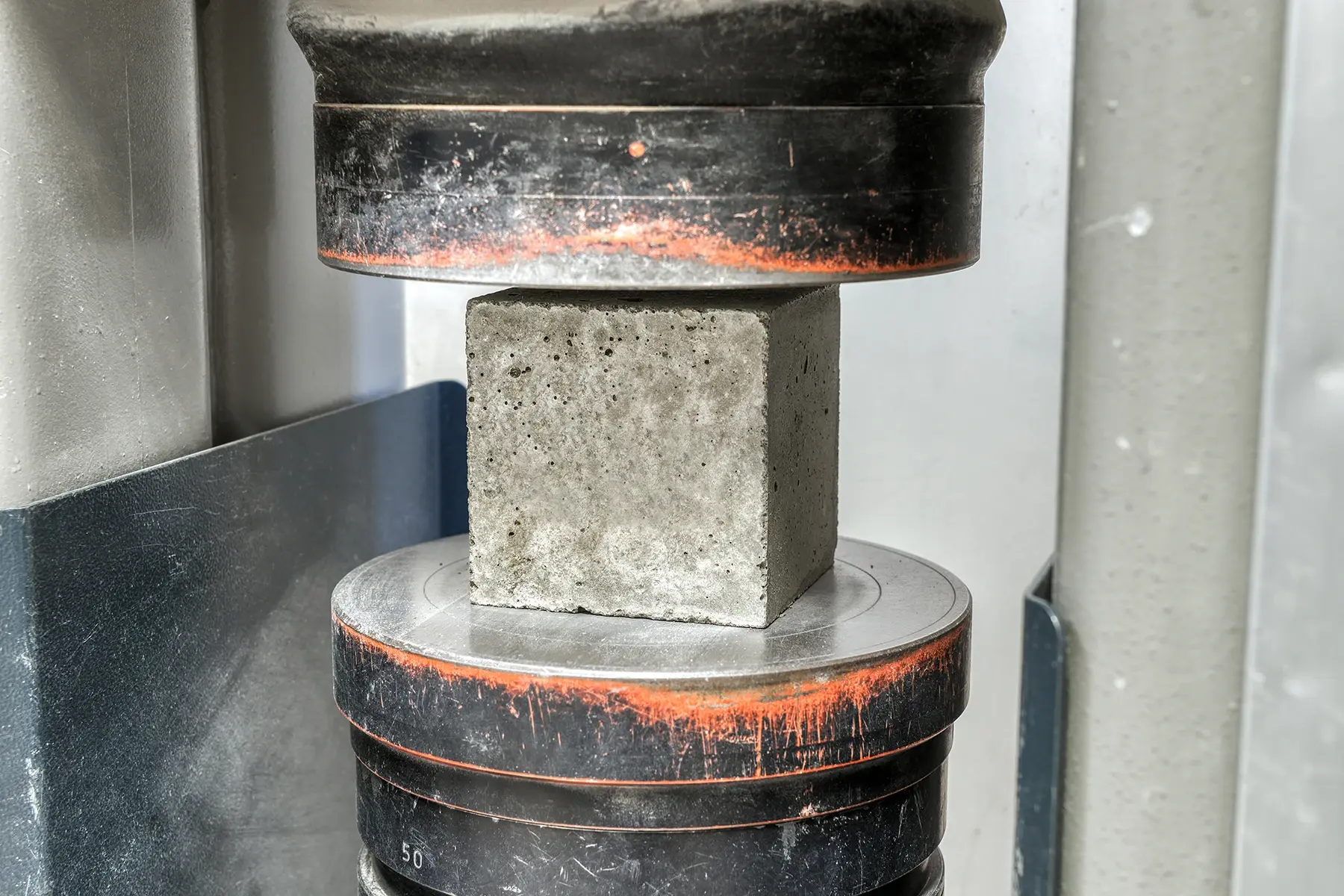
In a construction materials testing (CMT) laboratory, accurate test results depend on accurate equipment. For concrete compression testing, the compression machine plays a critical role in determining whether a specimen meets the required strength specifications.
That makes regular calibration more than just another item on a maintenance checklist. When test results are questioned or an audit takes place, your laboratory needs to be able to demonstrate that its equipment was operating accurately at the time of testing.
Proper calibration provides that documentation and helps establish confidence in the results your lab produces.
Calibration, Verification, and Adjustment: What's the Difference?
Calibration, verification, and adjustment are sometimes used interchangeably, but they serve different purposes.
Calibration is a formal comparison of a machine's output against a reference standard that is traceable to the National Institute of Standards and Technology (NIST). The process establishes the relationship between the force the machine applies and the value it reports, and it results in a calibration certificate documenting those measurements.
For concrete compression testing, ASTM C39 requires the testing machine to be calibrated in accordance with ASTM E4, Practices for Force Verification of Testing Machines.
Verification is typically an in-house check performed between formal calibrations. It helps confirm that the machine continues to operate within acceptable tolerances, but it does not replace a formal calibration.
Adjustment refers to corrective work performed to bring equipment back within tolerance. A machine may be adjusted during or following calibration, but adjustment alone does not constitute calibration. After an adjustment, the machine should be recalibrated to verify that the correction was successful.
Understanding these distinctions is important for maintaining accurate equipment records and demonstrating compliance.
What Is Checked During Compression Machine Calibration?
ASTM E4 requires verification across the range in which the machine will be used, typically using at least five load levels between 10% and 100% of the machine's rated capacity.
Force measurement is at the heart of the calibration process. A reference standard, such as a proving ring or calibrated load cell, is placed in the machine and loaded at specified increments. The force indicated by the machine is then compared with the known applied force.
Under ASTM E4, the maximum allowable error is 1% at any point within the verified range. A result outside that tolerance means the machine does not pass calibration.
There are other aspects of the machine that deserve attention as well.
Platen condition and flatness are important considerations during compression testing. ASTM C39 requires bearing faces to be flat within 0.001 inch per foot of diameter and free from conditions such as cracks, pitting, or excessive wear. Platens should be inspected during calibration and evaluated separately if they have been resurfaced or replaced.
The entire measurement chain is also important, particularly with today's digital equipment. The signal from the load cell must be accurately interpreted all the way through the readout system and into any testing software used to record results.
If your machine has received a new software or readout system since its previous calibration, the complete measurement chain should be revalidated.
When Should a Compression Machine Be Recalibrated?
Annual calibration is the baseline requirement under ASTM E4, but certain situations can require calibration sooner.
The Machine Has Been Relocated
Moving a compression machine—even within the same building—can affect the load frame, hydraulic system, or machine leveling. ASTM E4 calls for recalibration when a machine is moved to a new location.
The Machine Has Experienced an Overload
A specimen failure can sometimes subject the machine to a sudden and unexpected load. If an unusual failure or overload event occurs, the laboratory should determine whether the machine's calibration may have been affected.
Hydraulic Components Have Been Repaired
Repairs to hydraulic components can change how a compression machine delivers force. Following repairs or replacement of components such as seals, cylinders, valves, or pressure lines, the machine should be recalibrated before being returned to service.
An In-House Verification Fails
If an in-house check indicates that the machine has moved outside acceptable tolerances, formal recalibration is necessary. The laboratory should also document which results may have been affected during the period of potential non-conformance.
For these reasons, relying solely on an annual calibration date may not be enough to ensure ongoing equipment accuracy.
Hydraulic vs. Electromechanical Compression Machines
Both hydraulic and electromechanical compression machines are subject to ASTM E4 requirements. However, the way they generate force means that their potential failure modes can differ.
Hydraulic machines generate force using fluid pressure and are common in CMT laboratories. Problems such as hydraulic drift, seal wear, and pressure loss can develop gradually, potentially causing calibration to drift over time. For heavily used hydraulic machines, regular in-house verification between annual calibrations is particularly important.
Electromechanical machines use a motorized screw or ball screw drive to apply force. These machines are generally more stable over time, but they can still experience problems. Load cell damage or electrical component degradation can result in more sudden changes in performance.
The calibration requirements remain the same regardless of how the machine generates force. However, understanding the potential failure modes of your equipment can help laboratory personnel identify problems sooner.
Common Compression Machine Calibration Mistakes
A calibration certificate shouldn't simply be filed away after a technician leaves.
The certificate contains actual measurements, including the error recorded at each load increment. Looking at those results over time can help a laboratory identify equipment drift before the machine eventually fails calibration.
For example, a machine with 0.9% error may still fall within the allowable tolerance, but if previous calibrations showed significantly lower error, the trend may be worth watching.
Platen condition is another area that can easily be overlooked. Because technicians see the platens every day, gradual wear may not be immediately obvious. Regular documented inspections with defined acceptance criteria can help ensure the platens remain suitable for testing.
Another common issue is failing to recalibrate after a repair. Even if a repair seems minor, the machine should be recalibrated afterward to verify that it remains within tolerance.
Finally, don't overlook documentation. If a calibration was completed but the certificate cannot be located, your laboratory may have difficulty demonstrating compliance during an audit. Auditors need to be able to trace the connection between a test result, the equipment used to produce it, and the reference standard used to establish its accuracy.
Keep Your Compression Machine Accurate and Audit-Ready
Accurate compression testing starts with properly calibrated equipment. Working with a calibration provider accredited for the appropriate scope can help your CMT laboratory maintain both reliable measurements and the documentation needed to demonstrate compliance.
Cal-Cert provides ISO/IEC 17025 accredited calibration services for construction materials testing equipment, including compression machines. Our experienced technicians can help ensure your equipment is properly calibrated and your documentation is ready when you need it.
If your compression machine is approaching its annual calibration date—or has recently been relocated, repaired, overloaded, or flagged during an in-house verification—contact Cal-Cert to schedule calibration before your next round of testing.
ISO/IEC 17025 Accredited Calibration From Cal-Cert
-
ISO/IEC 17025 accredited calibration services
-
Fast, reliable turnaround times
-
Clear documentation for seamless compliance
- The nation’s largest provider of construction materials testing equipment calibration