Electrical Test Equipment Calibration: A Buyer's Guide to Traceability
A multimeter that reads half a volt off doesn't just produce a wrong number. On an electrical system, that margin of error can mean the difference between a safe circuit and a technician getting hurt. For facilities that rely on electrical test equipment daily, calibration isn't just about staying compliant. It's about trusting the readings a technician is making real decisions from.
This guide covers what counts as electrical test equipment, why calibration matters for each type, how often it should happen, and what to look for when choosing a calibration provider.
What Counts as Electrical Test Equipment
“Electrical test equipment” is a broad category that covers any instrument used to measure voltage, current, resistance, insulation integrity, or power quality.
The most common types include:
- Multimeters, used to measure voltage, current, and resistance across a wide range of applications
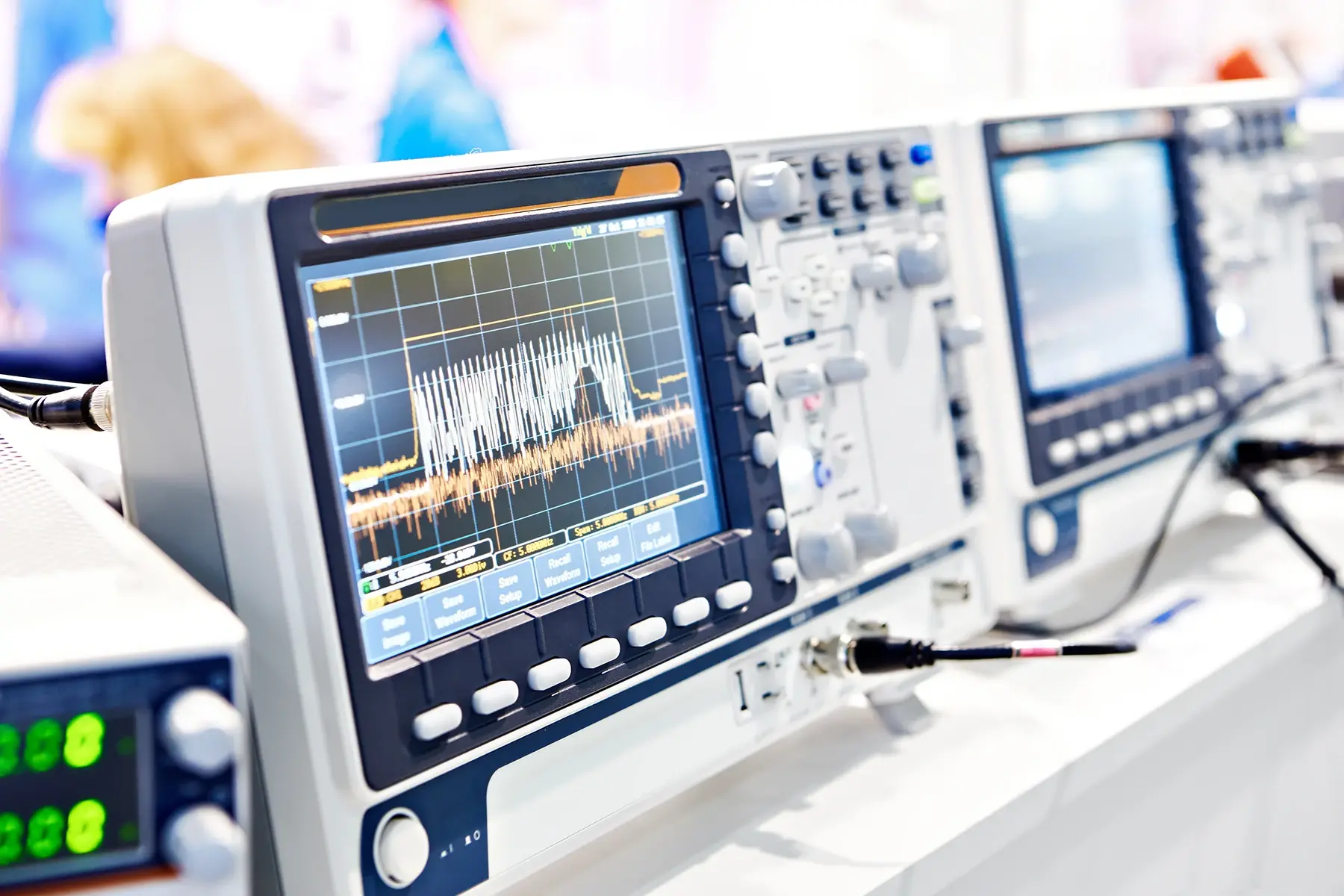
- Oscilloscopes, used to visualize and measure electrical signal waveforms over time
- Meggers (insulation resistance testers), used to check whether wiring and equipment insulation can safely hold a rated voltage without breaking down
- Clamp meters, used to measure current without breaking the circuit
- Power quality analyzers, used to monitor voltage sags, harmonics, and other electrical disturbances
- Ground resistance testers, used to verify grounding systems are performing correctly
Each of these instruments has its own calibration process, since they measure different electrical properties and carry different accuracy requirements depending on how they're used.
Why Calibration Matters for Electrical Test Equipment
Electrical measurements carry a unique risk profile compared to many other calibration categories. A drifted multimeter or megger doesn't just produce a bad data point. It can lead a technician to believe a circuit is de-energized when it isn't, or that insulation is intact when it's actually degraded. That's a direct safety issue addressed by standards like NFPA 70E, the Standard for Electrical Safety in the Workplace, not just a quality one.
Beyond safety, electrical test equipment calibration matters for:
- Regulatory and internal audit readiness. Facilities operating under quality standards like ISO 9001 or IATF 16949 are expected to show documented, traceable calibration records for the test equipment used in their processes.
- Warranty and liability protection. If a piece of equipment fails and an investigation follows, calibration records showing the test equipment used to verify it was properly maintained can matter.
- Consistency across technicians and shifts. When multiple people rely on the same equipment across different shifts or locations, calibration is what keeps everyone working from the same accurate baseline.
How Often Should Electrical Test Equipment Be Calibrated?
Calibration intervals for electrical test equipment typically depend on a combination of manufacturer recommendations, how heavily the equipment is used, and the criticality of the measurements it's taking.
A few factors that commonly drive interval decisions:
- Manufacturer specifications. Most manufacturers publish a recommended calibration interval, usually annually, as a starting point.
- Usage frequency and environment. Equipment used daily in harsh industrial environments may need more frequent calibration than equipment used occasionally in a controlled setting.
- Criticality of the application. Test equipment used for safety-related measurements, like verifying a circuit is de-energized before maintenance, often warrants tighter intervals than equipment used for general troubleshooting.
- History of drift or damage. Equipment that's been dropped, exposed to voltage spikes, or has shown inconsistent readings in the past should be checked more frequently, regardless of the standard interval.
Facilities with a large fleet of electrical test equipment often benefit from a documented calibration schedule that ties each instrument type to a specific interval, rather than relying on a single blanket rule for everything.
What a Compliant Calibration Certificate Should Include
When it's time for a supplier audit, an internal quality review, or simply confirming your equipment is in good standing, a calibration certificate should include:
- The specific instrument identification (make, model, serial number)
- The date of calibration and the next due date
- As-found and as-left data, showing the instrument's condition before and after adjustment
- The measurement uncertainty associated with the calibration (as required)
- Reference to the traceable standards used
- The technician's credentials and the calibration provider's accreditation scope
Note that measurement uncertainty reporting depends on the service level and the customer's specific requirements. Not every calibration needs it, and Cal-Cert offers service levels where uncertainty isn't reported on the certificate.
If a certificate is missing any of these, it's worth asking the provider whether that item applies to your specific service level before assuming something was left off in error. A certificate without as-found data, in particular, makes it impossible to know whether an instrument was actually out of tolerance before it was adjusted, which matters if a past reading is ever called into question.
Choosing an Accredited Calibration Provider
Not every provider calibrates every type of electrical test equipment, and not every provider's scope of accreditation covers the specific measurements your equipment needs. When evaluating a calibration provider, it's worth asking:
- Is the provider accredited to ISO/IEC 17025, and does their scope of accreditation specifically cover the instrument types you use?
- Do they offer on-site calibration for equipment that's difficult to remove from service, or is everything sent out?
- What is their typical turnaround time, and does it match how quickly you need equipment back in rotation?
- Do they provide as-found and as-left data on every certificate, not just a pass/fail result?
Accreditation to ISO/IEC 17025 means a provider's technical competence, including how it calculates measurement uncertainty when required, and quality processes have been independently evaluated, rather than simply self-declared. For facilities with multiple sites, working with a nationwide network of accredited labs also means the same calibration standards apply everywhere, instead of managing a different local vendor at every location.
What This Means for Your Team
Electrical test equipment calibration protects more than measurement accuracy. It protects the technicians relying on those readings to know whether a circuit is safe to work on. Getting the interval right, keeping documentation complete, and working with a properly accredited provider are the fundamentals that keep both your quality program and your team safe.
Don't wait for a failed instrument or a missed audit finding to find a gap in your calibration records. Cal-Cert's electrical calibration services are backed by ISO/IEC 17025 accreditation and a nationwide network of accredited labs, so your equipment stays accurate and your documentation stays audit-ready.
Request a Quote to get your electrical test equipment on a reliable calibration schedule.
ISO/IEC 17025 Accredited Calibration From Cal-Cert
-
ISO/IEC 17025 accredited calibration services
-
Fast, reliable turnaround times
-
Clear documentation for seamless compliance
- The nation’s largest provider of construction materials testing equipment calibration