Torque Calibration Services: What Gets Checked and How Often
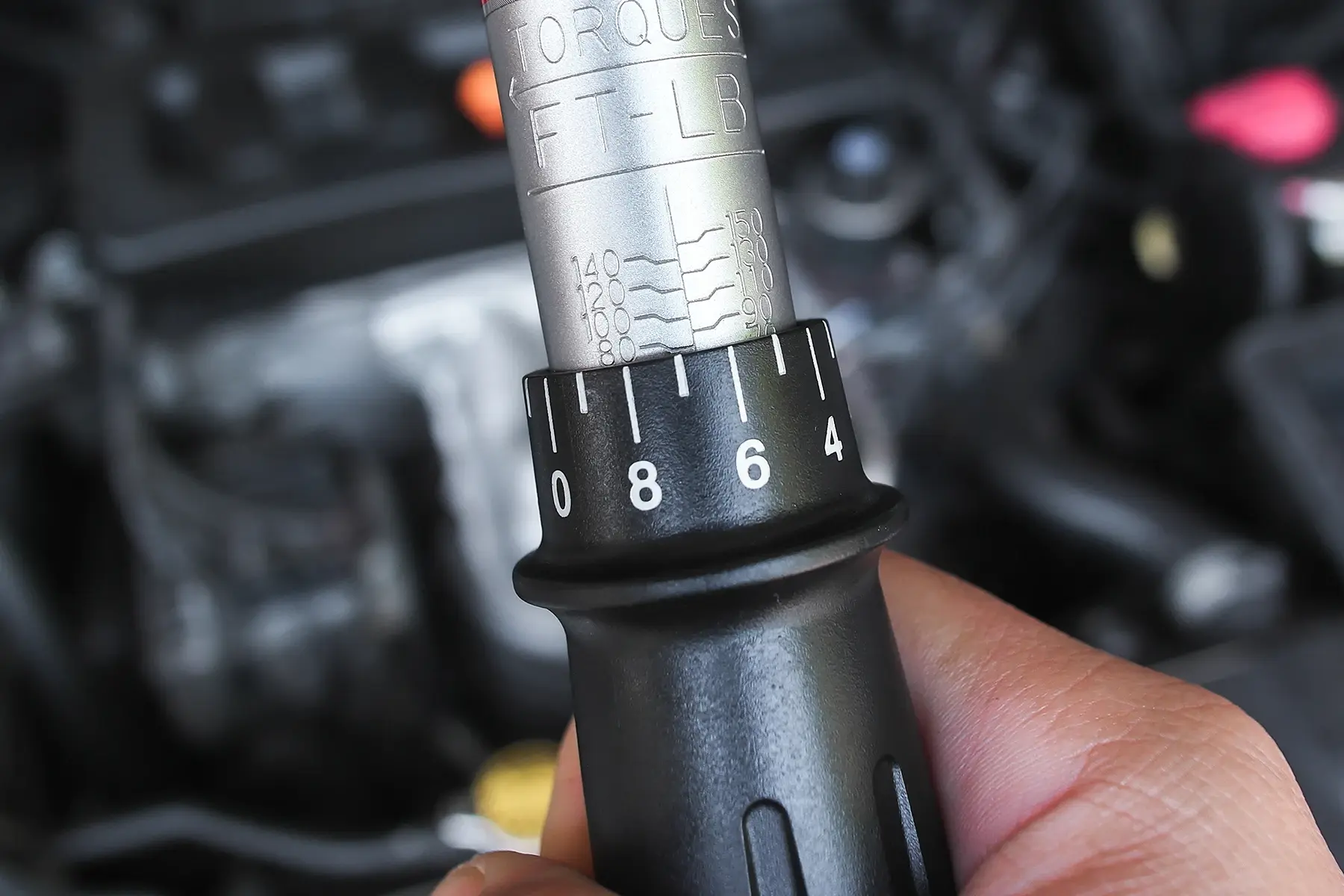
A torque wrench that's off by even a small percentage can mean a fastener that's under-tightened and works loose, or over-tightened and damages the part it's holding. In industries where torque specifications are tied directly to safety or product performance, that margin of error isn't a minor inconvenience. It's the difference between a joint that holds and one that doesn't.
This guide covers what torque tools typically need calibration, how often it should happen, and what to look for in a compliant calibration certificate.
What Torque Tools Need Calibration
“Torque calibration” covers a range of tools used to apply or measure rotational force, including:
- Click-type torque wrenches, which signal when a preset torque value is reached
- Dial and beam torque wrenches, which display torque continuously during application
- Electronic torque wrenches, which digitally measure and log torque values
- Torque screwdrivers, used for smaller fasteners in electronics and precision assembly
- Torque multipliers and torque testers, used to verify the output of other torque tools or to apply torque beyond what a standard wrench can generate
Each of these tools applies or measures torque differently, so calibration procedures and reference standards vary depending on the tool type and its torque range.
Why Torque Calibration Matters
Torque specifications exist because a fastener needs to be tightened within a specific range to perform correctly. Too little torque and a joint can loosen under vibration or load. Too much torque and a fastener, or the material it's threaded into, can be damaged or stripped.
This matters most in industries where torque specifications are tied to safety-critical assemblies:
- Aerospace and automotive manufacturing, where fastener torque is often specified down to a precise range for structural and safety-critical components
- Heavy equipment and machinery assembly, where under-torqued or over-torqued fasteners can lead to equipment failure in the field
- Pressure vessel and piping assembly, where bolted flange connections rely on correct, even torque to maintain a seal
A torque wrench that's drifted out of calibration can pass a visual inspection while still applying the wrong force every time it's used, which is exactly why calibration, not just physical condition, is what confirms a tool is trustworthy.
How Often Should Torque Tools Be Calibrated?
Calibration intervals for torque tools typically depend on a combination of standard guidance and how the tool is actually used:
- Manufacturer recommendations. Many torque wrench manufacturers recommend calibration at least annually, or after a set number of uses, whichever comes first.
- Usage frequency and severity. A torque wrench used daily on a production line will drift sooner than one used occasionally for spot checks, and should be calibrated more frequently as a result.
- Drops or overloads. Any torque tool that's been dropped or used beyond its rated capacity should be recalibrated immediately, regardless of where it falls in its normal interval.
- Industry standards, like ASME B107.28, which provides guidance on torque wrench performance requirements and is commonly referenced when establishing a calibration program.
Facilities with a large number of torque tools in circulation often benefit from a color-coded or tagged calibration system, so it's immediately clear which tools are current and which are due.
What a Compliant Calibration Certificate Should Include
A torque calibration certificate should include:
- The specific tool identification (make, model, serial number)
- The date of calibration and the next due date
- As-found and as-left data at multiple points across the tool's torque range
- The measurement uncertainty associated with the calibration (if required)
- Reference to the traceable standards used
- The technician's credentials and the calibration provider's accreditation scope
Measurement uncertainty reporting depends on the service level and the customer's specific requirements. Not every service level includes it, so its absence from a certificate isn't necessarily a gap.
If you're building out a broader compliance checklist for your torque calibration program, our Torque Wrench Calibration Compliance Checklist walks through what to verify before an audit or supplier review.
Choosing an Accredited Calibration Provider
Not every provider calibrates every type of torque tool, and torque range matters just as much as tool type. When evaluating a provider, it's worth asking:
- Is the provider accredited to ISO/IEC 17025, and does their scope of accreditation cover the specific torque range and tool types you use?
- Do they test at multiple points across the tool's full range, not just a single value?
- What is their typical turnaround time, especially for tools that are in regular daily use?
- Do they provide as-found and as-left data at each tested point, not just a single pass/fail result?
Accreditation to ISO/IEC 17025 means a provider's measurement processes, including how it calculates uncertainty when required, have been independently evaluated, which matters when torque specifications are tied to safety or warranty requirements.
Tightening Up Your Calibration Program
Torque tools are easy to overlook because they don't look like precision instruments, but a drifted torque wrench can compromise an assembly just as easily as any other miscalibrated tool. Keeping tools on a documented calibration schedule, and knowing what a compliant certificate should include, protects both the fasteners you're tightening and the equipment or structure they're holding together.
Cal-Cert's torque calibration services are backed by ISO/IEC 17025 accreditation and a nationwide network of accredited labs.
Request a Quote to get your torque tools on a reliable calibration schedule.
ISO/IEC 17025 Accredited Calibration From Cal-Cert
-
ISO/IEC 17025 accredited calibration services
-
Fast, reliable turnaround times
-
Clear documentation for seamless compliance
- The nation’s largest provider of construction materials testing equipment calibration