
Why Calibration Matters for Real-Time Concrete Maturity Testing
Waiting 28 days to find out whether a concrete pour has reached design strength isn't always an option, especially on a schedule-driven project. Real-time concrete testing methods, most commonly the maturity method, let contractors and QA/QC teams estimate in-place strength well before that 28-day mark. But those estimates are only as good as the equipment producing them.
This guide covers what real-time concrete testing involves, which field equipment needs calibration, and how often it should happen.
What Is Real-Time Concrete Testing?
Real-time concrete testing, most often performed using the maturity method, estimates concrete strength based on the combined effect of time and temperature during curing. Rather than waiting for a lab break at 7, 14, or 28 days, sensors embedded in or attached to the concrete track its temperature history, and that data is converted into an estimated strength using a pre-established strength-maturity relationship for the specific mix design.
This approach is commonly used to make time-sensitive decisions, including:
- Determining when formwork or shoring can be safely removed
- Deciding when post-tensioning can begin
- Confirming when cold weather protection can be discontinued
- Determining when a roadway or bridge deck can be opened to traffic
Because these decisions carry real safety and scheduling consequences, the equipment behind a maturity reading needs to be trustworthy, not just convenient.
Field Equipment That Needs Calibration
Real-time concrete testing and general field QA/QC rely on several types of equipment, each with its own calibration needs:
- Maturity meters and temperature sensors. These record the temperature history used to calculate the maturity index, so their accuracy directly determines how reliable the strength estimate is.
- Slump testing tools, including slump cones and related measuring equipment, used to verify fresh concrete workability meets mix design requirements.
- Air content testing equipment, such as pressure meters used to verify entrained air content in fresh concrete.
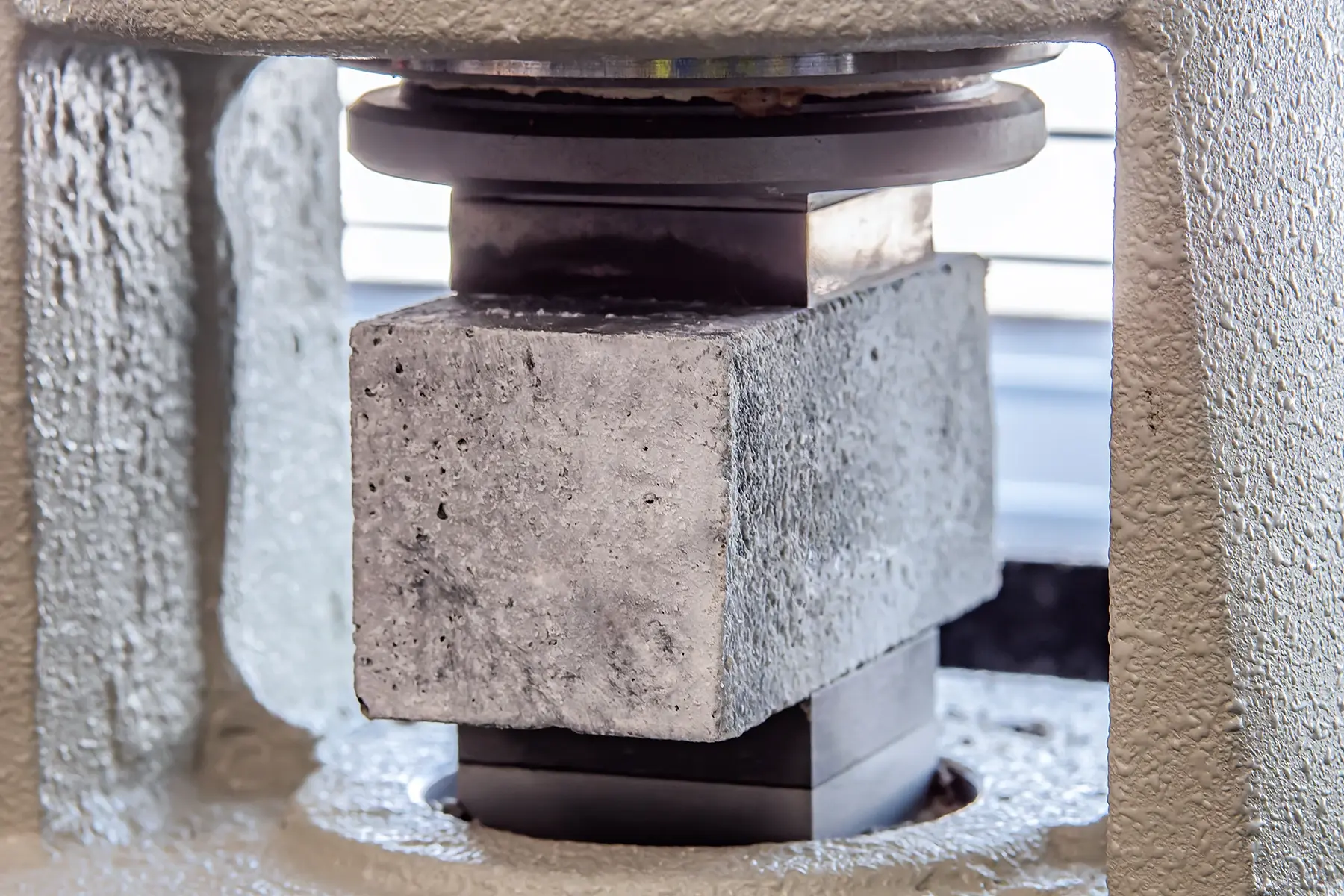
- Concrete cylinder testing equipment, including compression testing machines used for the standard-cure lab breaks that maturity testing is calibrated against in the first place.
The maturity method itself depends on an accurate strength-maturity relationship established in the lab, so even the equipment used to build that initial relationship needs to be in proper calibration.
Why Calibration Matters for Real-Time Testing Specifically
Real-time concrete testing is often used precisely because a project can't afford to wait for a standard lab break. That makes the accuracy of the field equipment even more important than it would be in a less time-sensitive testing program. A maturity meter reading temperature incorrectly doesn't just produce a bad data point. It can lead to formwork being removed too early, a roadway opening to traffic before the concrete is actually ready, or a supplemental cure decision based on a strength estimate that isn't accurate.
Because these decisions often can't be undone once made, calibration isn't just a documentation requirement. It's part of what makes real-time testing a responsible substitute for waiting on a standard cure cycle.
Real-time concrete testing is often used precisely because a project can't afford to wait for a standard lab break. That makes the accuracy of the field equipment even more important than it would be in a less time-sensitive testing program. A maturity meter reading temperature incorrectly doesn't just produce a bad data point. It can lead to formwork being removed too early, a roadway opening to traffic before the concrete is actually ready, or a supplemental cure decision based on a strength estimate that isn't accurate.
Because these decisions often can't be undone once made, calibration isn't just a documentation requirement. It's part of what makes real-time testing a responsible substitute for waiting on a standard cure cycle.
How Often Should This Equipment Be Calibrated?
Calibration intervals vary by equipment type:
- Maturity meters and temperature sensors are typically calibrated at least annually, though project specifications or agency requirements may call for more frequent verification.
- Slump cones and related measuring tools should be checked periodically for wear and dimensional accuracy, since physical damage can affect readings even without an electronic component to drift.
- Air content meters should be checked quarterly to help satisfy applicable standards, verified against a calibration vessel of known volume.
- Compression testing machines used for standard-cure lab breaks typically require calibration verification at least annually, and often more frequently under an accredited lab's own quality program.
Project specifications, whether from a state DOT, a specifying engineer, or an accreditation body, should always take priority over a general industry rule of thumb when it comes to interval requirements.
What a Compliant Calibration Record Should Include
For concrete testing equipment used in real-time or standard-cure testing programs, calibration documentation should include:
- The specific equipment identification (make, model, serial number)
- The date of calibration and the next due date
- As-found and as-left data
- The measurement uncertainty associated with the calibration
- Reference to the traceable standards used
- The technician's credentials and the calibration provider's accreditation scope
Keeping this documentation available on-site or easily accessible is particularly important for real-time testing programs, since decisions are often made in the field, on a tight timeline, based on this equipment's output.
Choosing a Calibration Provider
When evaluating a provider for concrete testing and maturity equipment, it's worth asking:
- Are they accredited to ISO/IEC 17025, and does their scope cover temperature sensors, testing machines, and related field equipment?
- Can they provide on-site calibration for equipment that's difficult to bring into a lab?
- What is their typical turnaround time, particularly during peak construction season?
- Do they understand project-specific or agency-specific calibration frequency requirements?
Building on a Strong Foundation
Real-time concrete testing gives project teams a faster path to strength decisions, but only when the equipment behind those decisions is properly calibrated. From maturity meters to slump cones to compression testing machines, keeping field equipment on a documented calibration schedule protects both the schedule advantage real-time testing offers and the safety decisions built on top of it.
Cal-Cert's construction materials testing calibration services are backed by ISO/IEC 17025 accreditation and a nationwide network of accredited labs.
Request a Quote to get your maturity meters and field testing equipment on a reliable calibration schedule
ISO/IEC 17025 Accredited Calibration From Cal-Cert
-
ISO/IEC 17025 accredited calibration services
-
Fast, reliable turnaround times
-
Clear documentation for seamless compliance
- The nation’s largest provider of construction materials testing equipment calibration